
How Do I Know If I Have True Repentance?
Psalms 51
Is there something like true repentance? Can you falsely repent to God? Did you know that you can cry unto God but not be sorry for your sin? So, how do you know if you have true repentance? In today’s devotion, we are going to study the difference between true and false repentance.
What is repentance anyway? The word repentance according to Strong’s Greek Bible means “compunction (for guilt, including reformation); by implication reversal (of [another’s] decision).” As we can see repentance, is sorrow for what has been done and includes a willingness to change so it doesn’t happen in the future. From this definition of true repentance, we can identify characteristics counterfeit of false repentance. False repentance is saying that you’re sorry but not actually being sorry. It is an act, a ruse; it doesn’t prompt a person to change.
“Have mercy upon me, O God, according to thy lovingkindness: according unto the multitude of thy tender mercies blot out my transgressions.”
Psalms 51:1
Have you ever had someone apologize to you, and you roll your eyes knowing that they aren’t really sorry. You know from past experience that they will do it again and again and again if given the chance. Do you think God knows when we’re just saying sorry for saying sorry sake? Of course He does!
The writer of Hebrews explains false repentance using Esau as an example:
“Lest there be any fornicator, or profane person, as Esau, who for one morsel of meat sold his birthright. For ye know how that afterward when he would have inherited the blessing, he was rejected: for he found no place of repentance, though he sought it carefully with tears. “
Hebrews 12:16-17
Esau was sorry that he lost his birthright but he wasn’t repentant. His ‘repentance’ was false.
Let’s look at an example of true repentance. The story of David and Bathsheba is well known. David impregnated another man’s wife and then killed him. And for a while, King David was quite comfortable with his sins and didn’t see anything wrong, until the prophet Nathan pointed out his iniquity.
David began to feel a deep sense of guilt and shame for what he had done, which prompted his repentance and gave us this beautifully written Psalm. From Psalms 51 we can see the blueprint for true repentance.

1. David’s sorrow for sin
“For I acknowledge my transgressions: and my sin is ever before me.”
Psalms 51:3
The first thing that David did when going to God with repentance, is that he acknowledged his sin. He was not after to say that he did something terribly wrong. He committed adultery and murdered someone. The hallmark of true repentance is that we first acknowledge what we have done wrong and are sorry for it. A lot of times we are only sorry that things went wrong or that we got caught; this is not a characteristic of true repentance.
2. He was sorry that his sin separated him from God
“Cast me not away from thy presence; and take not thy holy spirit from me.”
Psalms 51:11
When we sin, we separate ourselves from God. David knew that he had hurt people by what he had done, but he also knew that he damaged his relationship with God. So, in order to repair the bridge that he created by his sin, he asked God’s forgiveness. David’s relationship with God was important to him. It was God who appointed him as king and David knew in order to continue the success of his kingdom, he had to depend on God’s guidance.
3. David desired a change of heart
“Create in me a clean heart, O God; and renew a right spirit within me.”
Psalms 51:10
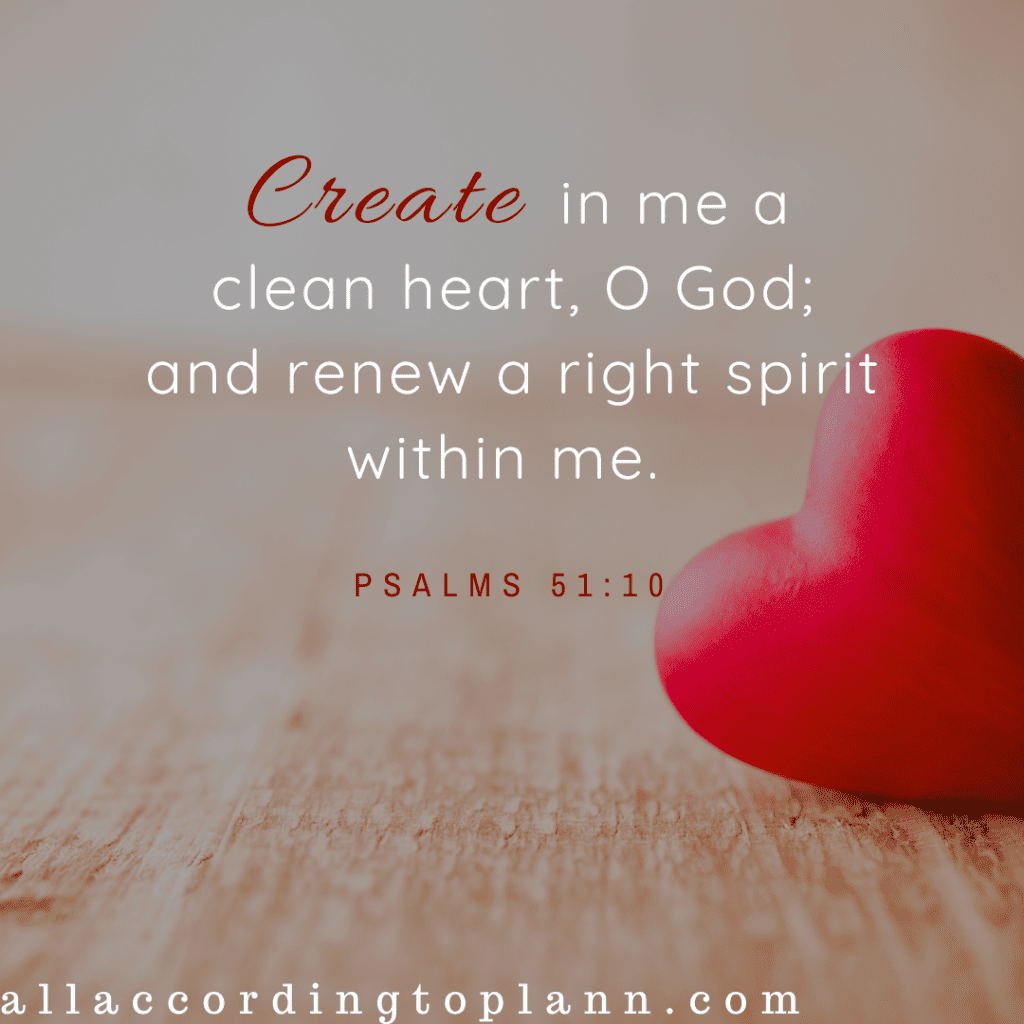
True repentance requires a want for change. David knew if he didn’t allow God to change his heart, he’ll return to his sinful practices. He wanted a clean heart and a renewed spirit. He wasn’t only sorry for what he had done, but he wanted to never do something like that again. David understood the ripple effect that his sin had on his life and on those around him and it was his desire to return to God and leave his sinful habits behind.
4. David was grateful for God’s forgiveness
“Deliver me from bloodguiltiness, O God, thou God of my salvation: and my tongue shall sing aloud of thy righteousness. O Lord, open thou my lips; and my mouth shall shew forth thy praise.”
Psalms 51:14-15
David knew that he didn’t deserve forgiveness; it was not his right to be forgiven. He knew that he had done something terribly horrid and he was truly sorry about it. Therefore, David humbled himself before the throne of God. He was then grateful for God’s free gift of forgiveness.
Asking God for true repentance
We have the opportunity, just like David to receive forgiveness from God. God has promised to redeem us from our sins if we repent. He has called us to His throne of grace.
“Let us therefore come boldly unto the throne of grace, that we may obtain mercy, and find grace to help in time of need.”
Hebrews 4:16
Admittedly, sometimes we are not truly repentant. Sometimes we are sorry for what has happened as a result of sin, rather than the sin itself. Luckily, we can ask God for a repentant heart and contrite spirit. We can ask that God will help us to feel truly sorry for our sin and to help us to want to turn away from our hurtful habits.
“The sacrifices of God are a broken spirit: a broken and a contrite heart, O God, thou wilt not despise.”
Psalms 51:17
Prayer for today:
Dear Heavenly Father,
I am broken, Lord. I know that I might not always really feel sorry for what I have done, but I am asking you today to give me true repentance. Create in me a clean heart oh Lord that I turn away from my sin for good.
Amen.
Thank you for taking the time to read this article today. If you have a question, query or story you’d like to share with me, please leave a comment or email me using the form below.